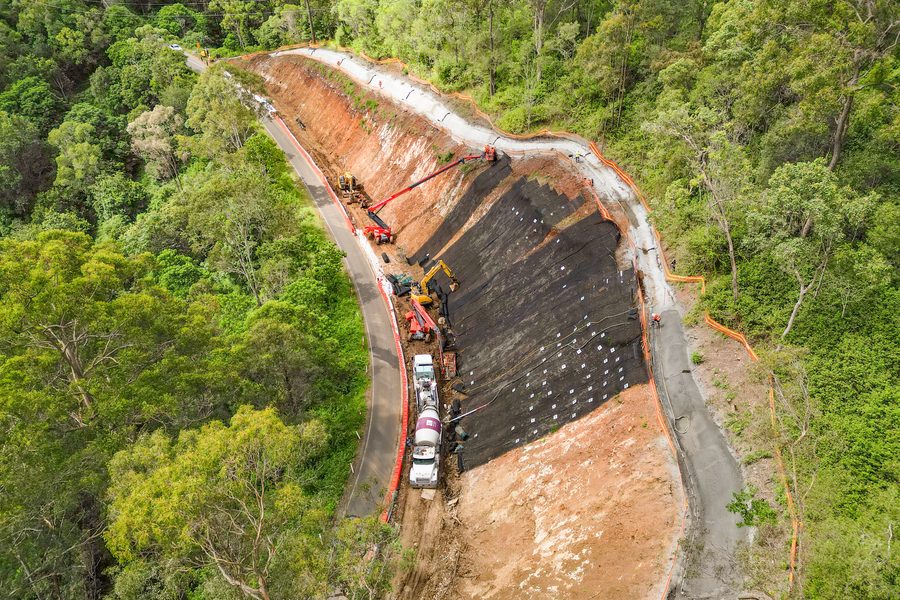
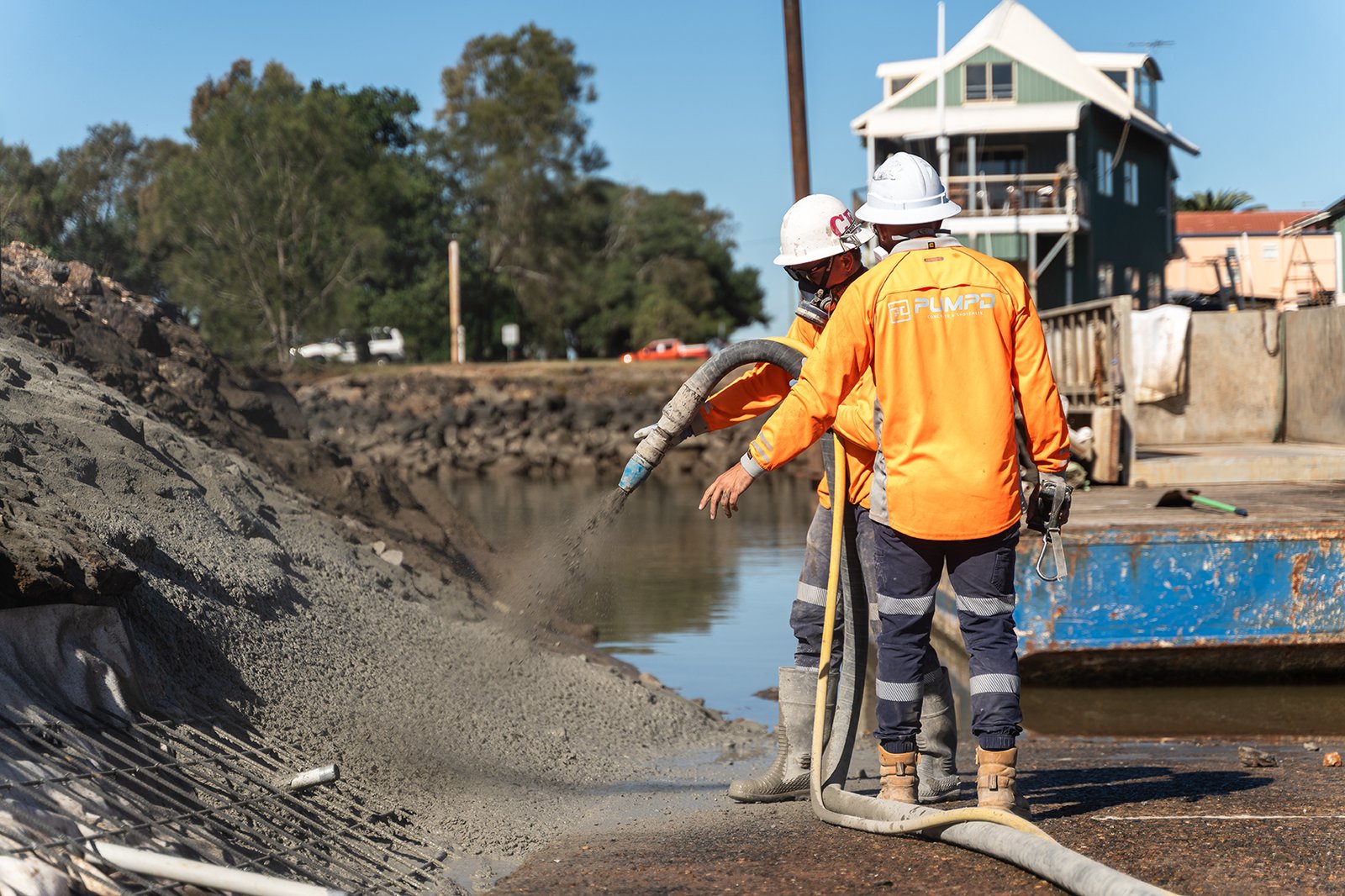
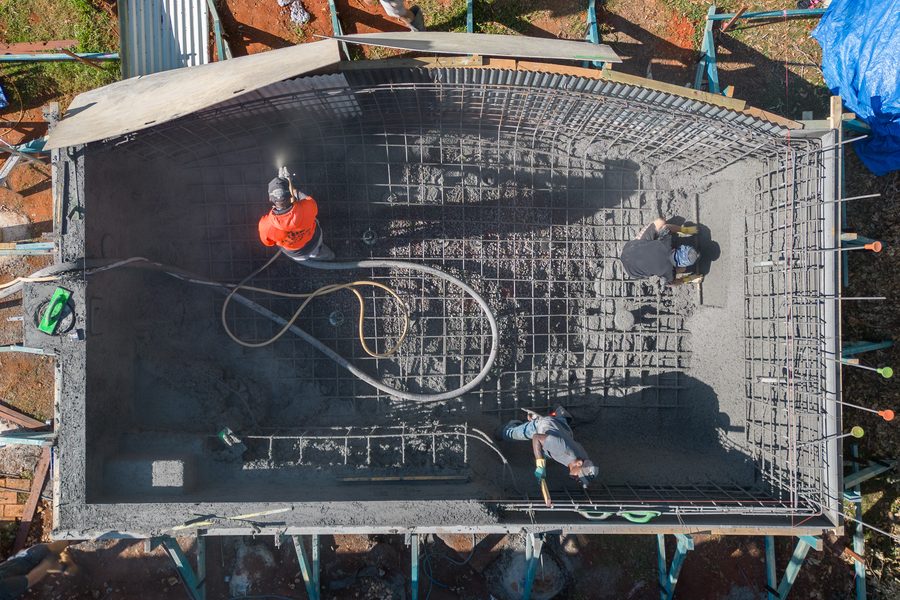
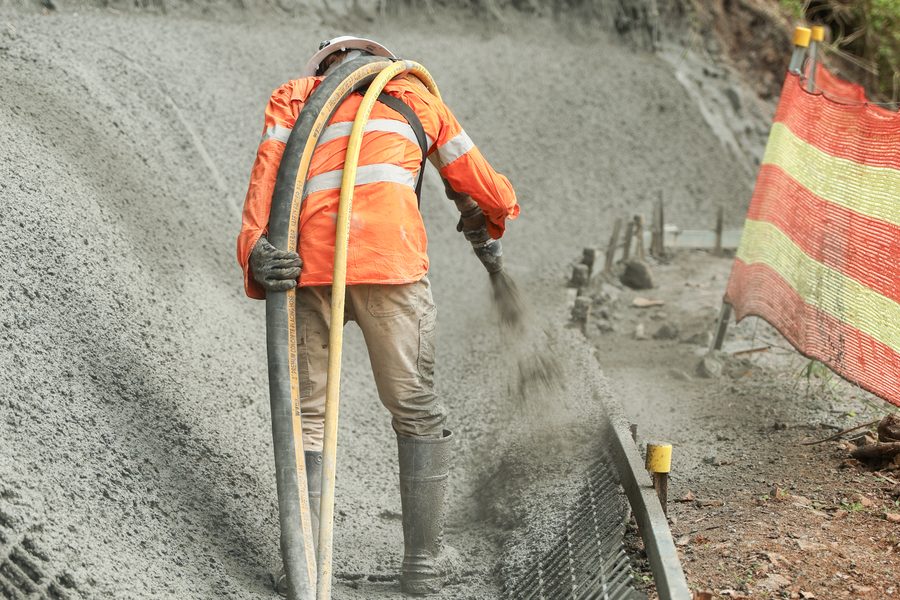
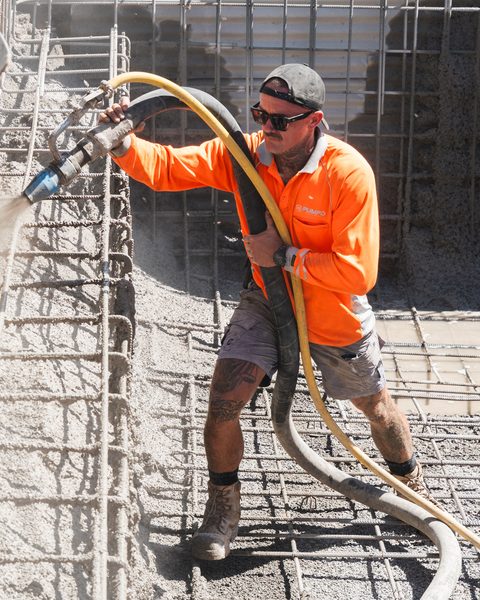
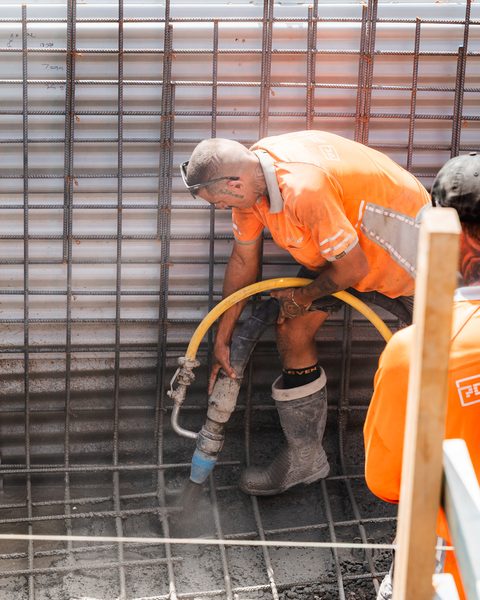
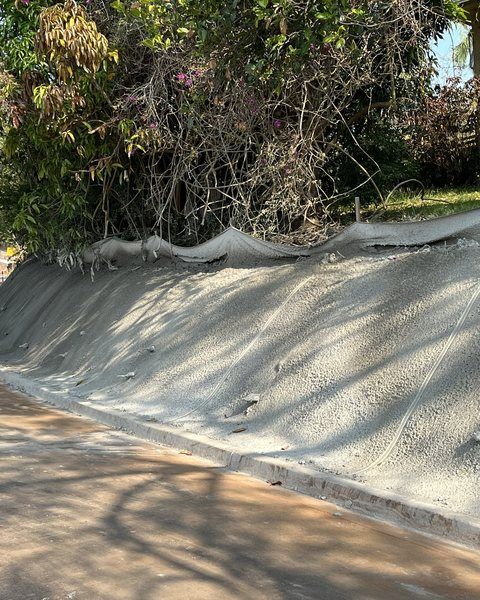
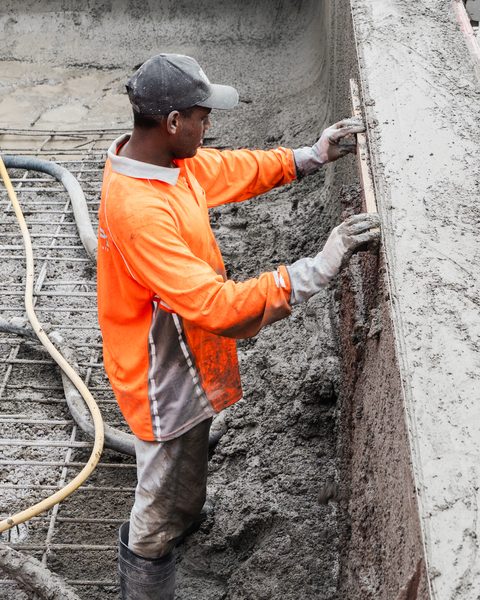
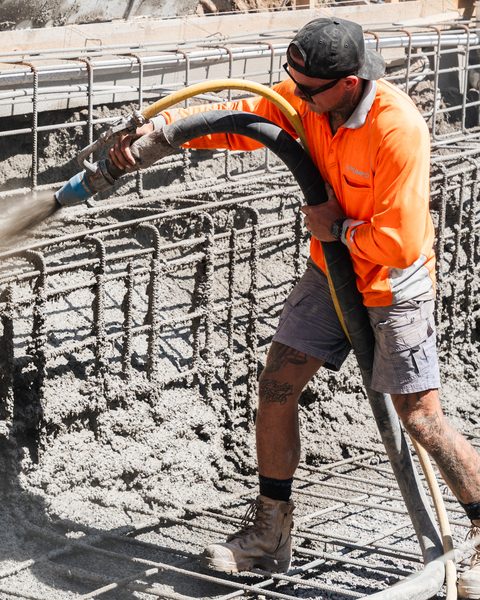
Shotcrete is concrete pumped through a hose to a nozzle, where compressed air sprays it onto the surface at high speed. It compacts as it hits, bonds as it lands and builds up in layers, so it holds on a vertical or overhead face. That’s why it works for retaining walls, batters, basements, tunnels and pool shells, where formwork is either impossible or not worth what it costs.
We spray wet-mix. The concrete is batched at the plant to the engineer’s mix design, and loads are checked on arrival before they go on the wall. Dry-mix has its place, but on a structural or civil job, the consistency of wet-mix is what engineers and QA look for.
Blake started in concrete remediation and guniting, then moved into hard rock mining: shaft lining, batching shotcrete, running robotic spray rigs and supervising ground support shifts. In Papua New Guinea he supervised the shotcrete division on one of the largest ground support contracts in the southern hemisphere, training crews and spraying both robotic and by hand. Then he brought that back to South East Queensland. That same discipline goes into every job, from a backyard pool shell to a civil batter.
How a job runs↓



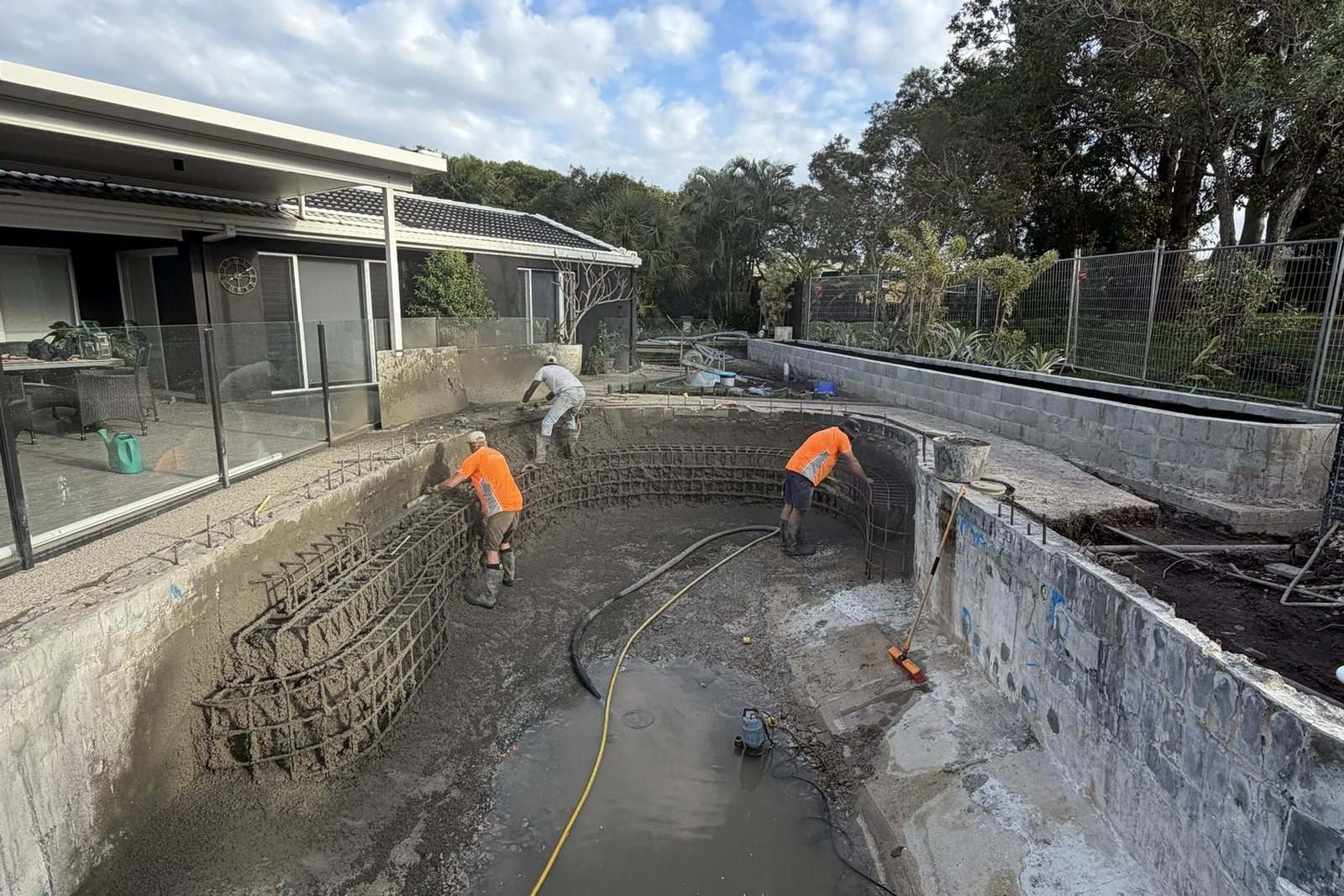
Most of our shotcrete work comes from three types of client. Whoever you are, you’ll get a straight answer on scope and program the same day you ring, and a written quote as soon as we have what we need.
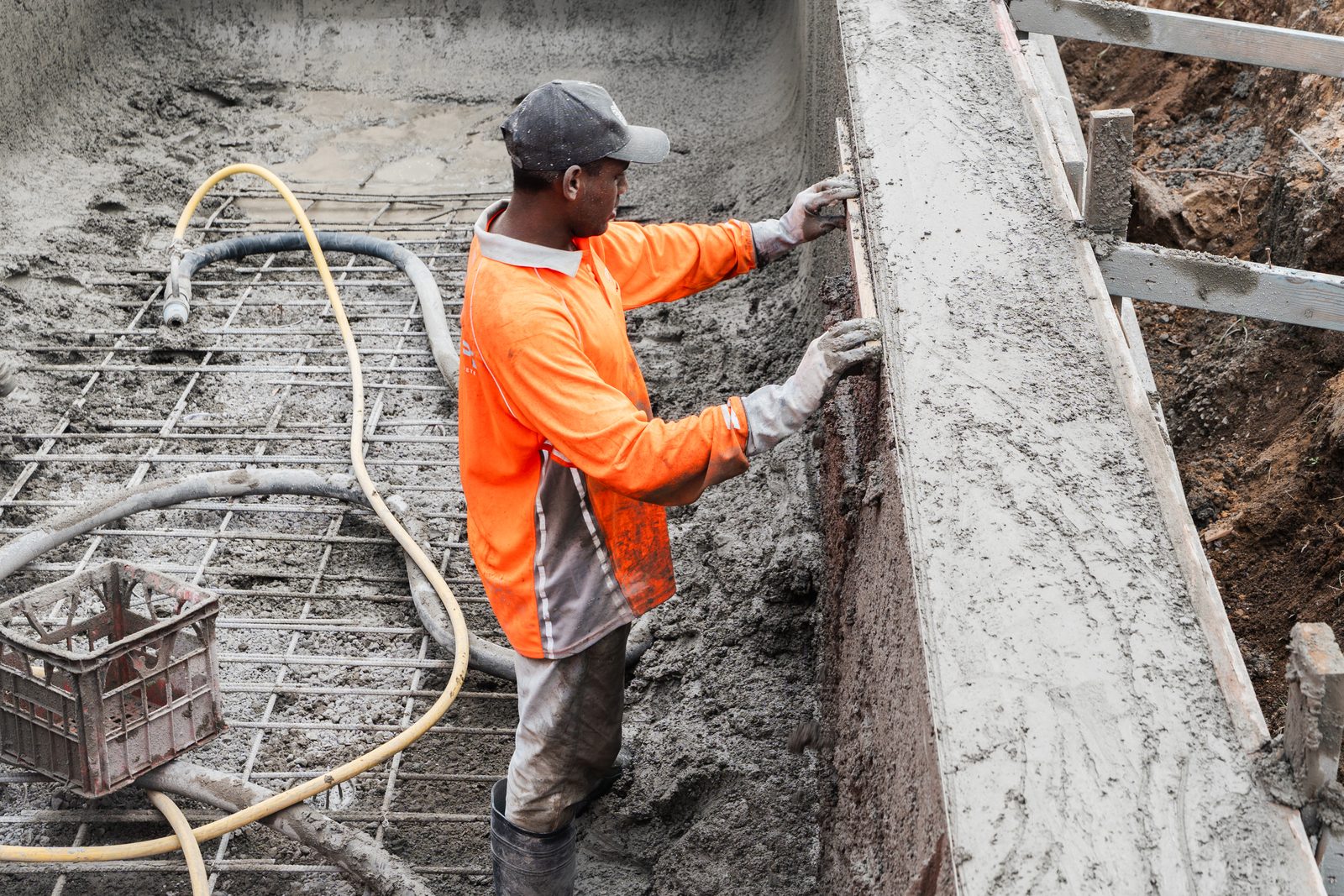
You need the shell sprayed and cut clean on the day you booked, so the rest of your program holds. We confirm the afternoon before and we’re set up before the first agitator arrives on site.
Basement walls, retaining walls and capping beams on sites where formwork is a fight. QBCC licensed, $20M public liability, WorkCover current, and the documentation to satisfy a principal or a certifier without you having to chase it.
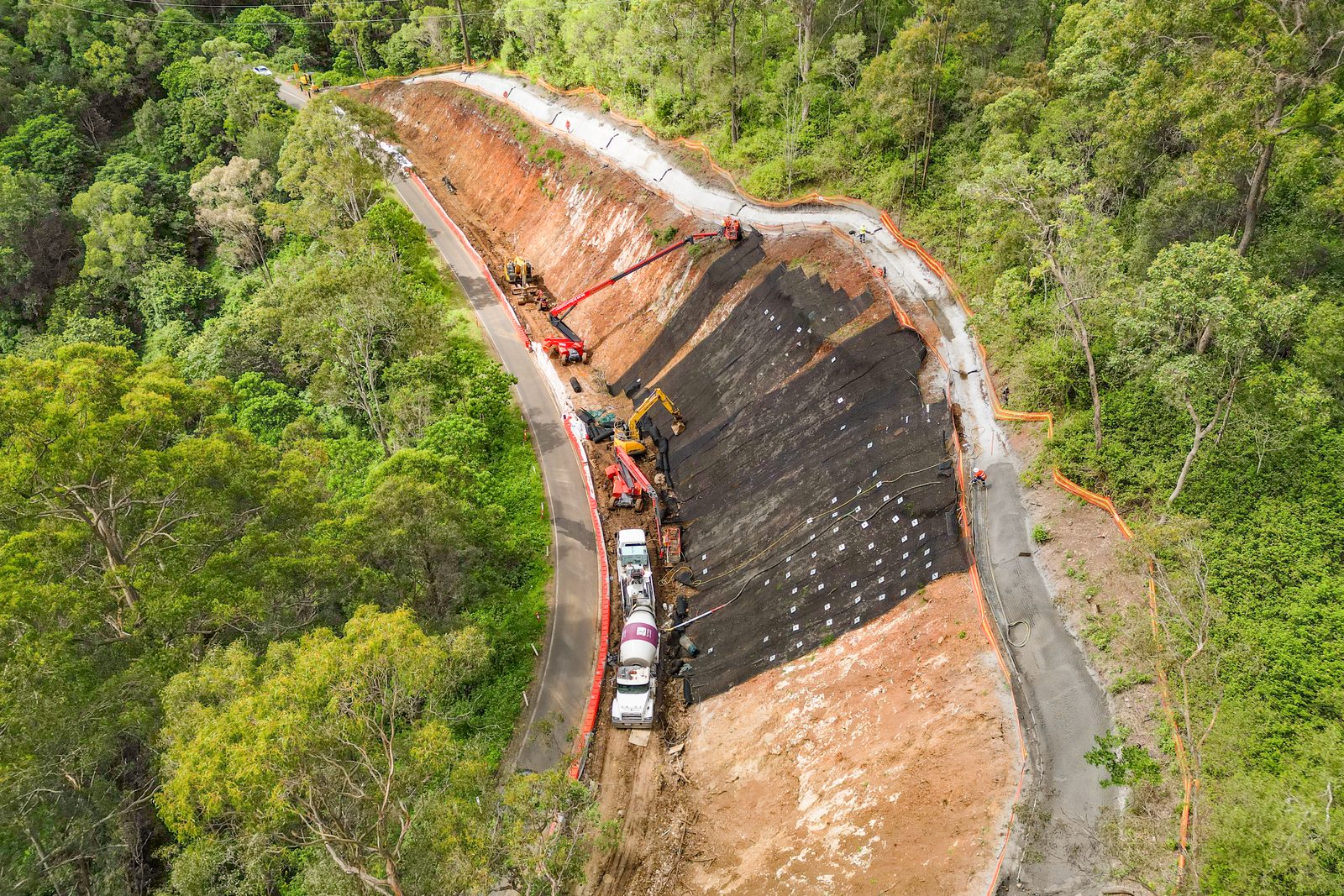
Labour-only spray against the mesh and anchors your crew has placed, with our SWMS written to your templates and working to your ITP. We’ve done it on TMR range works and flood recovery packages under head contractor QA systems, with an EFNARC-accredited robotic nozzleman in-house.
We’re line pump and spray, not boom hire. If your job needs a boom, we can organise one through trusted partners.
We won’t spray a face until it’s been signed off. On our own jobs, we organise the engineer and work through it with you. When we’re the subcontractor, the inspection sits with the principal contractor, and if anything doesn’t look right on the day, we’ll raise it before we start.
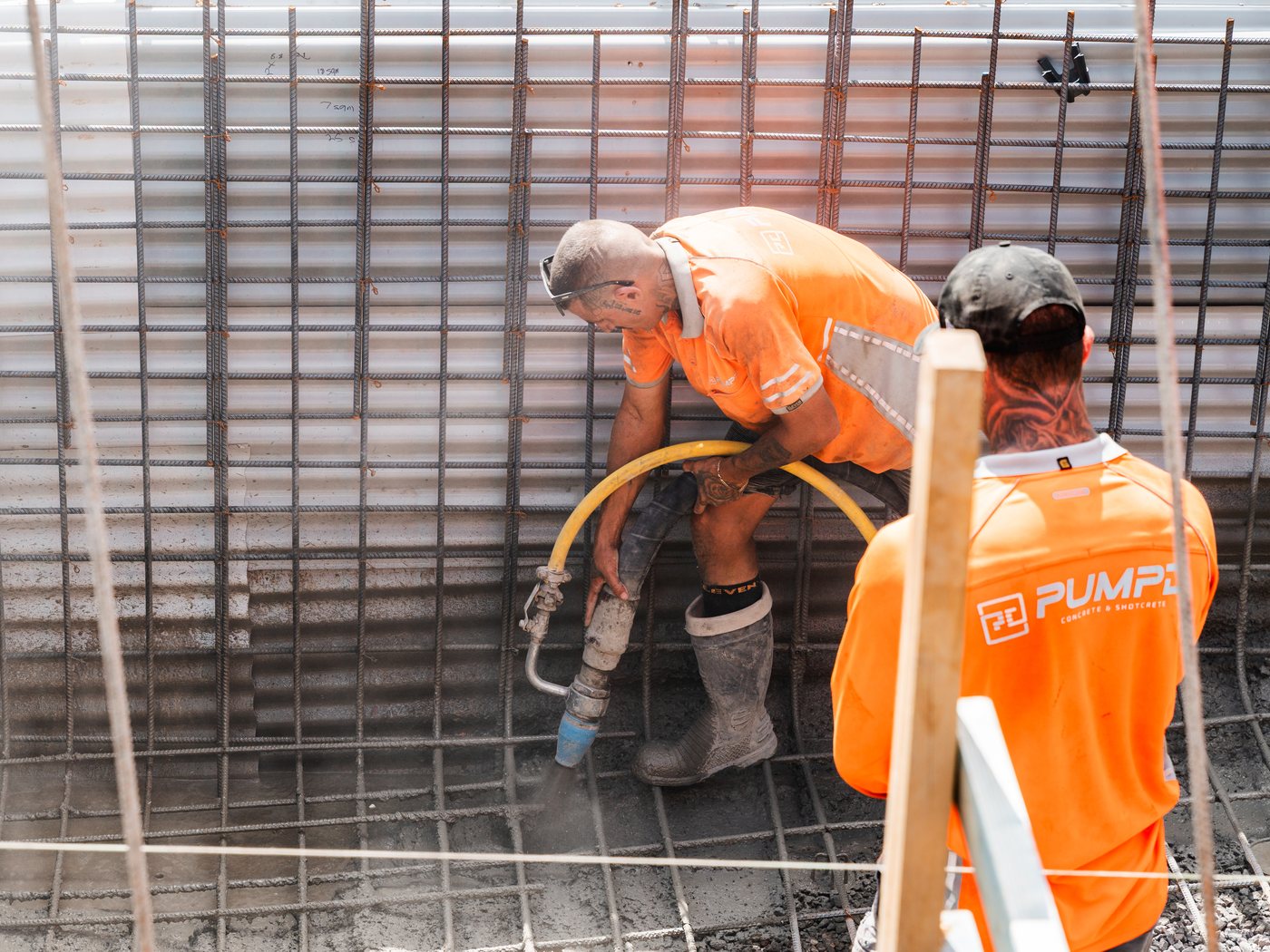
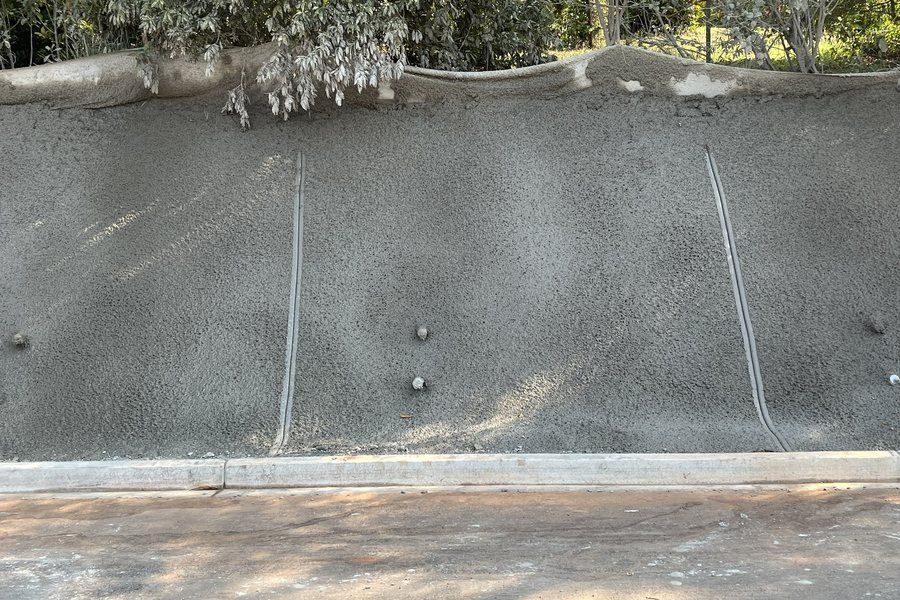
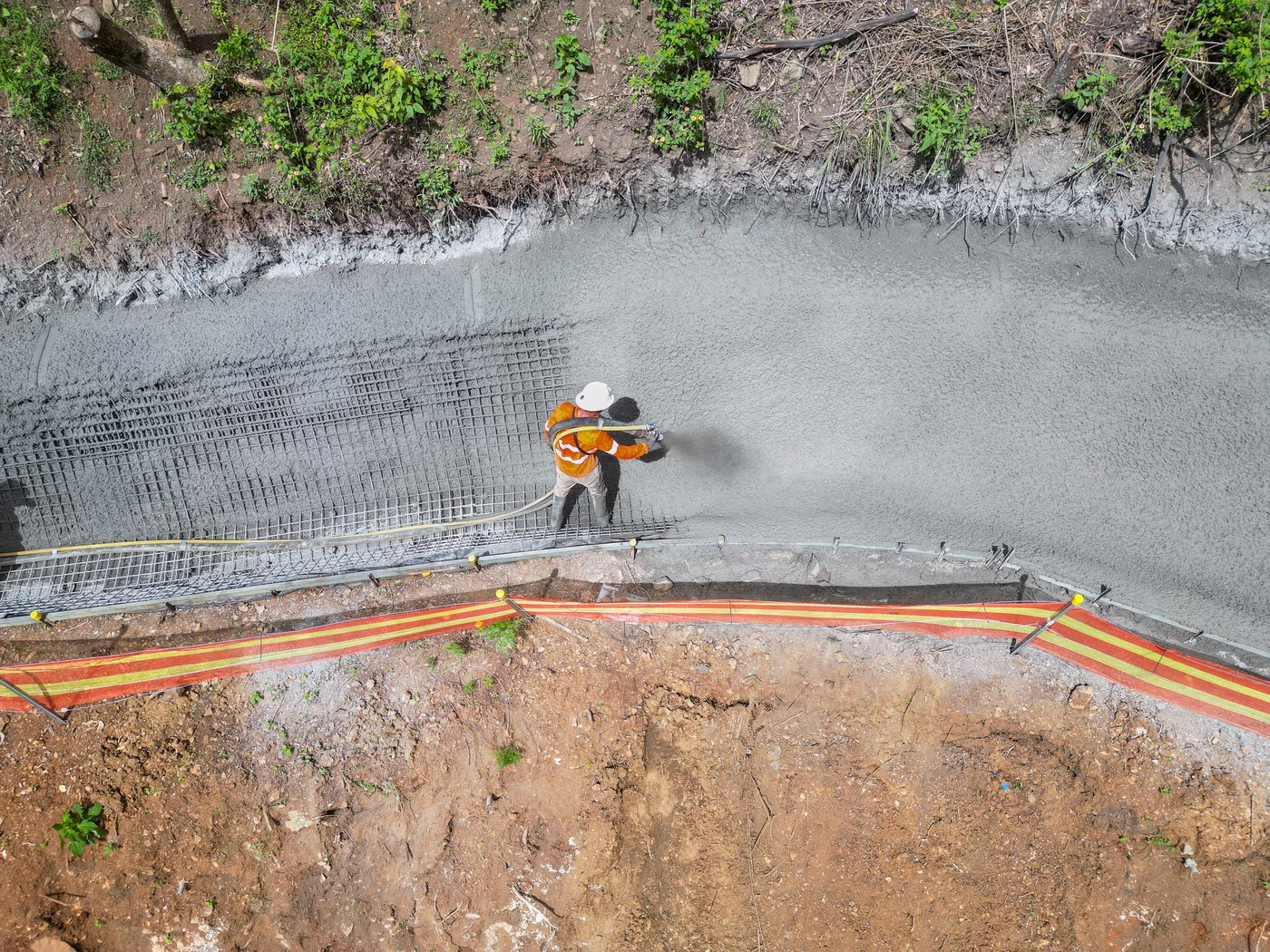
Six steps, same every time, whether it’s a pool shell or a batter on a range road. Step through to see what happens and what we need from you.
You ring 0434 866 490 and talk to Blake, not a call centre. Tell us the job, the access and the date you want it. Most of the time we can tell you on that call what’s involved, what we need to quote it, and roughly where you sit in the program.
We work out where the pump sits, where the line runs and what has to be protected along the way. On a tight residential block, that’s the difference between a clean day and a mess. On a batter, it’s about fall, water and safe access to the face.
In writing, with what’s included, what’s not and what we’ve allowed for, so there’s no argument later about who was supplying what. The split that catches people is reinforcement: civil work is usually labour-only against steel, mesh and anchors already in place, while residential is often full scope.
Our own site-specific SWMS, daily pre-starts on the plant, and test panels where the project specification or ITP requires them. If you’re the principal contractor, our SWMS and records come to you for review and approval before we start, and we work to your site rules and ITP.
Pump positioned, lines run and anything nearby that overspray could reach is covered. Wet-mix goes on in layers to the nominated thickness, then it’s finished to the agreed standard: off the gun, blinding and trim, or float and trowel. A plunge pool can be sprayed and cut in a few hours.
Rebound cleaned up as agreed in the scope, washout contained or bagged off site, and the road pressure-cleaned. We leave the site the way we found it. Then the invoice or payment claim, which matches the scope and the variations you already signed.
Anything not answered here, call Blake on 0434 866 490 and ask him directly.
The difference is how it’s placed. Poured concrete needs formwork to hold its shape. Shotcrete is pumped to a nozzle and sprayed on with compressed air, so it compacts as it hits and holds on vertical and overhead faces without formwork. We spray wet-mix, built up in layers, for retaining walls, pool shells, batters, basements and tunnels.
EFNARC runs an internationally recognised certification scheme for sprayed-concrete nozzlemen. Blake holds EFNARC accreditation as a robotic nozzleman, assessed on application quality and consistency for robotically applied shotcrete. It’s what engineers and Tier 1 principals look for when they assess structural and civil work.
There’s no set height. It comes down to the wall, the ground, access and the engineering. Tell us the height, length and what’s behind it, and we’ll tell you straight what’s involved.
Depends on the job. Civil shotcrete is usually labour-only against the steel, mesh and anchors your crew has placed; we don’t install anchors. Residential shotcrete can be full scope: steel fixing, drainage, formwork, finish and spray. Tell us the job and we’ll confirm exactly what’s included.
Yes. We spray and hand-cut plunge, lap and custom pool shells, spas and mock rock for pool builders, builders, landscapers and homeowners across the Sunshine Coast, Moreton Bay, Brisbane and Gympie, and other areas by arrangement.
Sunshine Coast, Moreton Bay, Brisbane and Gympie as our core area, regularly Gold Coast, Fraser Coast and Northern Rivers NSW, and away work for the right project across regional Queensland.
If scope changes on the day we record it on site with a photo, a signature and a timestamp before proceeding. No surprises on the invoice.
